I told my new boss that I had a lump in my anus. Right after I was hired but before I started. Just in case I was dying (I was 22).” — Anonymous survey respondent
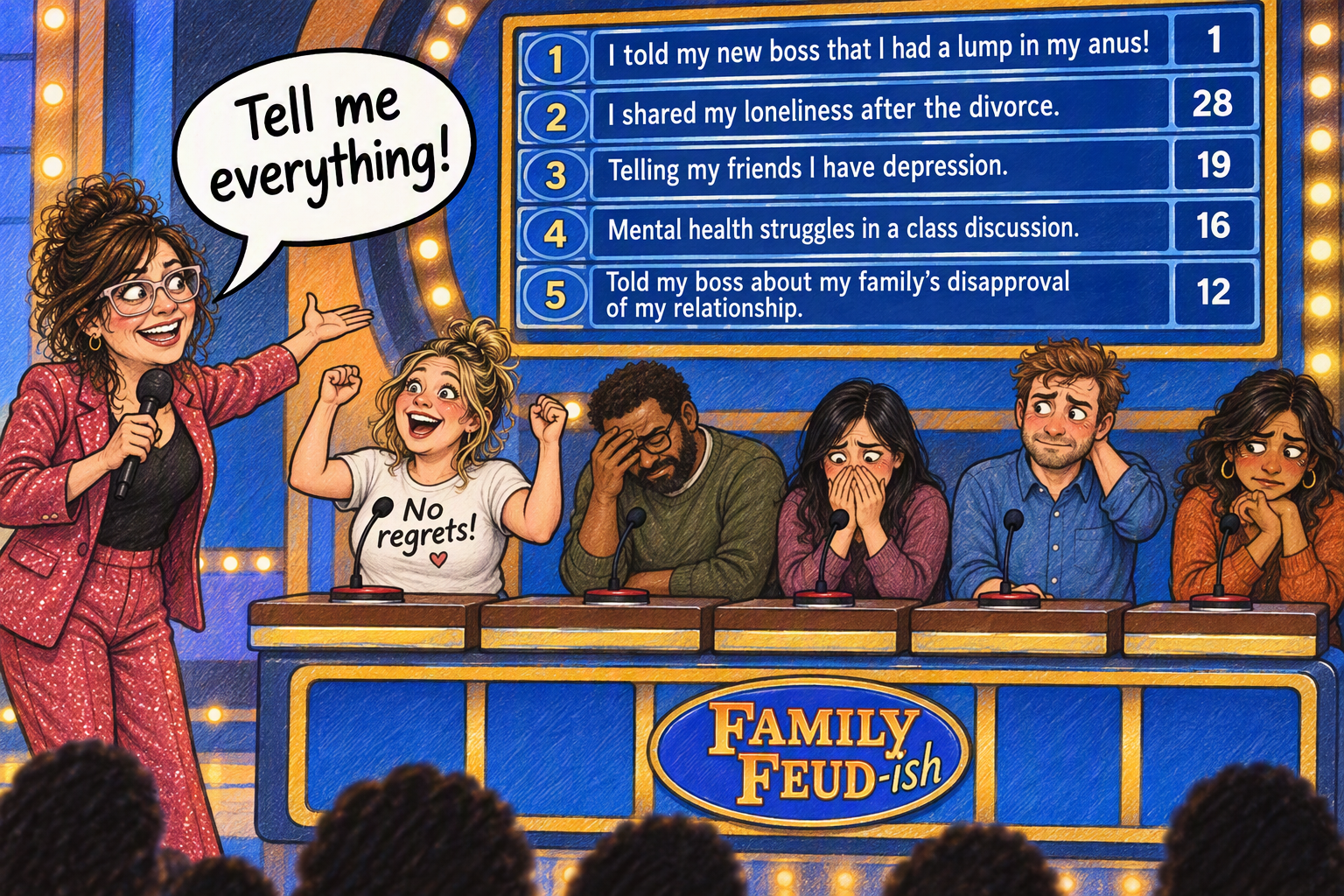
Who says assholes can’t bring us together?
Probably the boss on the receiving end of this overshare. But for me? This is a kindred spirit. If we ever found one another, I know every embarrassing moment we’d ever had would be shared in our first conversation, and we’d be friends for life.
For this majestic yapper, no topic appears to be off-limits.
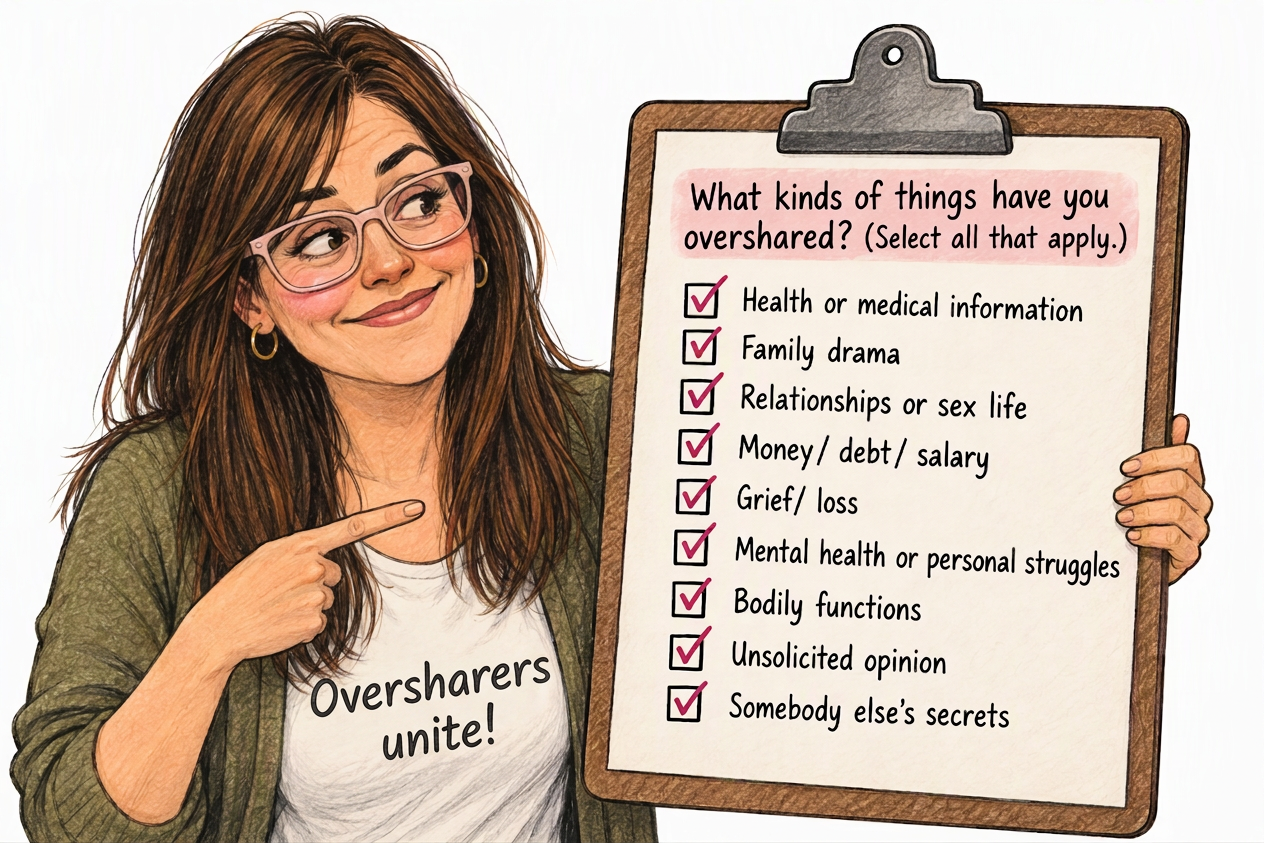
Did I meet a fellow oversharer in the wild, you ask? Sadly, no. I took to the streets (an anonymous survey shared on Reddit) to poll strangers on their oversharing thoughts, feelings, reasoning and, of course, their overshare highlight reels. And this person did not disappoint.
Not only are they are out there living their best life, verbally baring it all; in their own words, they regret nothing.
This oversharer is living the dream, ladies and gentlemen.
It gave me a glimmer of hope. And then I read the rest of the results.
The stories people shared weren’t quite in the same realm as the ones that haunt me. I also didn’t get many detailed retellings (apparently, us oversharers need hard eye contact to really let loose). But what I did see in the comments — or, more accurately, where I saw myself in the comments — was the shame factor.
Lumpy Anus Oversharer (I say that with all the respect in the world. It takes a special person to be that in tune with their health and that comfortable bringing it to the attention of anyone — doctor or boss — at 22 years old. I will say, my overshares have never involved below-the-belt concerns. Wait, that’s a lie. Hair removal makes for excellent acquaintance convo, but I digress.) was an anomaly. They were the only respondent who essentially said, “I regret nothing.”
And the rest of us? Well, we have apparently given this a little more thought.
73% of respondents selected connecting over a similar experience as a reason for oversharing, and 68% said sharing had helped them connect with someone.
Yet 82% reported sometimes or frequently regretting sharing.
Which brings me back to the crux of my confusion: how can the same act that helps us feel closer to someone leave us feeling so vulnerable afterward?
Don’t worry. I asked that, too.
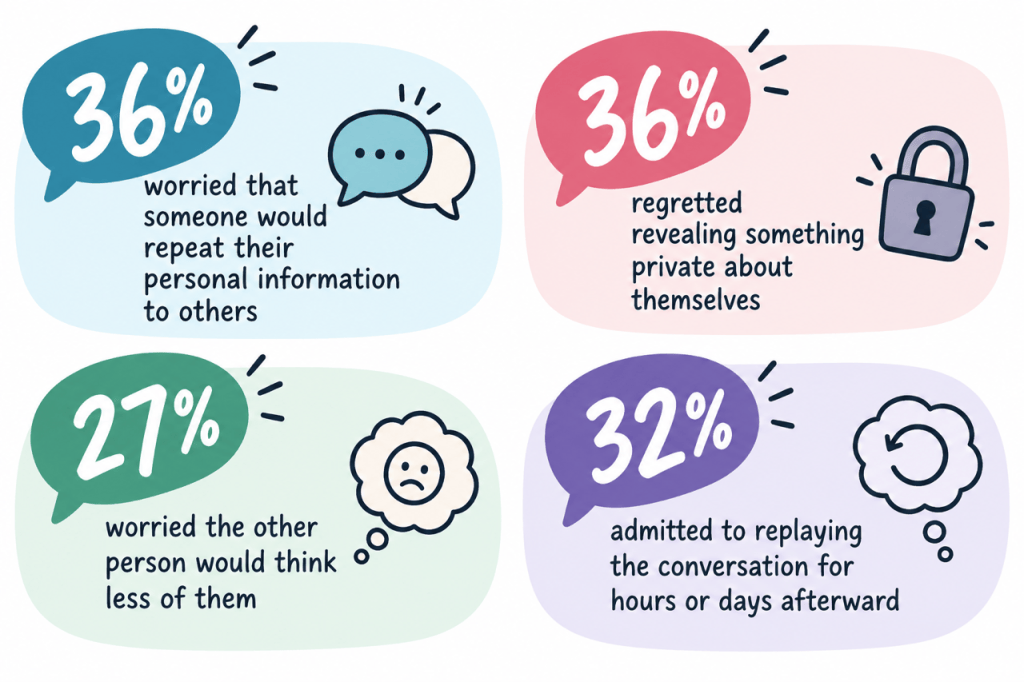
Apparently, we can get the connection we were hoping for and still spend the next three days wishing we’d kept our mouths shut.
I can understand that when it comes to the truly unnecessary overshares.
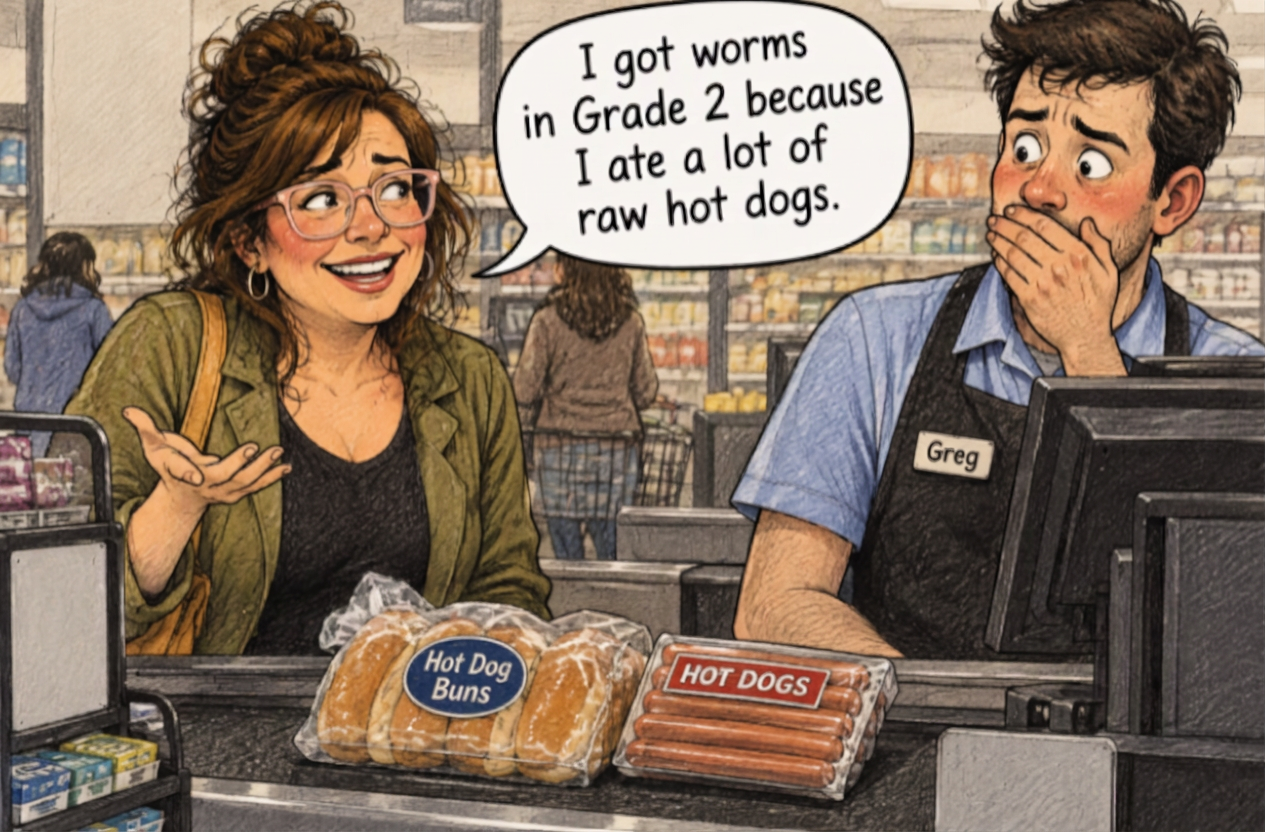
Some information does not need to leave the vault.
But the main themes that came up in my Reddit survey were things I’d assumed were just part of being human: relationships, health, work stress, finances — the kinds of stressors most of us have dealt with at some point.
If we can’t overshare about shared human experiences, what is there to talk about?
But maybe that’s where I’m getting stuck. I’m looking at what we share while spending far too much time worrying about what other people think of us for sharing it.
We don’t actually know what the person on the receiving end is thinking. Maybe they’re judging us. Maybe they’re uncomfortable. Maybe they’re already drafting a text to their bestie that begins, You will not BELIEVE what this crazy woman just told me.
Or maybe they’re just listening. Or, more likely, thinking, Thank God I’m not alone.
I’ve spent an unreasonable amount of time assuming that the things I share become the things people remember about me. That one conversation has somehow eclipsed all the other evidence of my personality, character and general usefulness as a human being.
But what if it hasn’t?
Unfortunately, I can’t ask the people my oversharing has connected me with because we’re friends now, and they’re going to tell me they find me whimsical and unique (right, guys!?).
I also can’t go back to the carpool moms, grocery clerks or the poor soul who came to my door stumping for a political party I don’t align with. Because that would be insane.
“Hey, you! Remember when I cry-yelled at you about how your candidate’s choices had destroyed public health, then regaled you with tales of my childhood diabetes diagnosis? Did you think that was weird, or do you feel closer to me?”
Not only do I tell myself they felt closer to me, but I also like to imagine they switched parties. Oversharing: making our world a more democratic place, one overshare at a time.
Clearly, I need another perspective.
I want to hear from someone who spends her working life on the receiving end of other people’s stories. Not the person at the office Christmas party who has just learned far too much about my digestive system, but someone whose work involves listening to people share deeply personal experiences, often under extraordinarily difficult circumstances.
This search has led me to an absolute gem of a human being — someone who spends her working life listening, learning, connecting and helping.
Maybe understanding how our stories are received on the other side is the key to freeing ourselves from the oversharing shame spiral.
Are people judging us as harshly as we judge ourselves?
Next time, we’re taking a journey to the other side of the overshare.

Leave a Reply